Limestone Polish
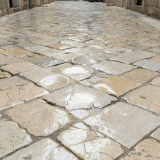
The structural wear on Dubrovnik's streets acts as a physical timeline, worn smooth by three centuries of commercial and civilian traffic.
In Europe, antiquity is rarely confined behind glass. Heritage is walked upon, inhabited, and adapted. By closely observing the integration of historical infrastructure into contemporary daily life, one gains a more accurate reading of a region's endurance and priorities.
The main pedestrian artery of Dubrovnik, the Stradun, represents a masterclass in urban resilience. Paved entirely in local limestone following a devastating 1667 earthquake, the street was laid out broadly to act as a firebreak and central civic spine. Today, millions of footsteps have polished the stone to a high sheen, creating a surface that brilliantly reflects both sunlight and rain. It is a surface that dictates the slow, careful gait of the local population and reveals the city's enduring maritime wealth.
Across the continent, Roman engineering remains functionally present. It is not merely in the grand arenas like the Colosseum, but in the strict grid layouts (castra) underlying modern city centers like Florence or Chester. A keen observer can spot sections of ancient aqueducts actively incorporated into modern walls, or uneven basalt blocks (basolato) exposed beneath modern asphalt patches, demonstrating that contemporary infrastructure literally rests upon an ancient foundation.
The structural wear on Dubrovnik's streets acts as a physical timeline, worn smooth by three centuries of commercial and civilian traffic.
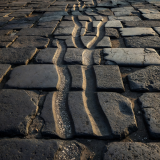
In places like Pompeii and central Rome, deep grooves worn into hard volcanic basalt stone indicate the standard gauge of ancient chariot and cart wheels.
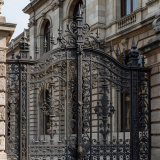
Late 19th-century wrought iron grilles and boot scrapers found across European capitals reflect the industrial revolution’s intersection with daily pedestrian life.
Your privacy choices Essential cookies keep this site working. Optional ones help us see what is useful. You can change your choice at any time. More about cookies