Streets with Stories
The distinct character of a European city is rarely found in its skyline; it resides in the materials lining its pedestrian corridors. From medieval stonemasonry to maritime ceramics, the physical fabric of these urban centers provides a tangible record of past trades, prevailing climates, and cultural priorities.
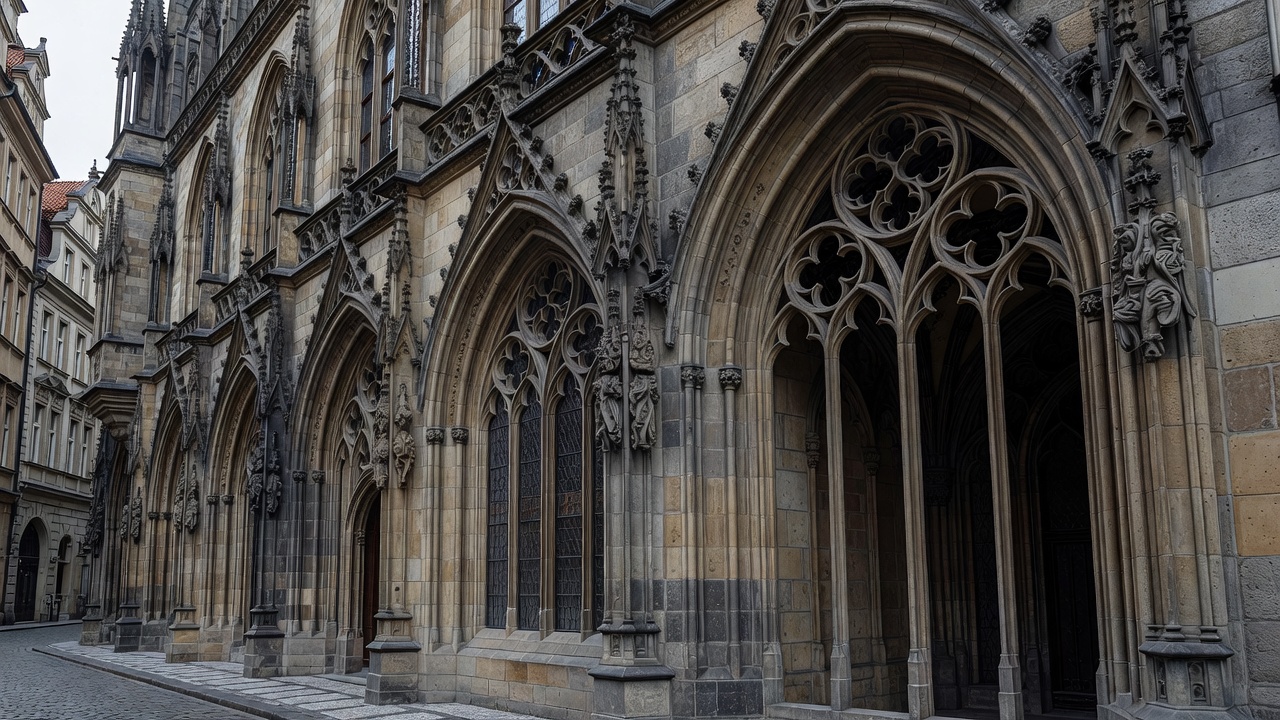
Prague's Structural Gothic
Observation in Prague reveals an intense concentration of structural gothic details preserved through centuries. The sandstone blocks constituting much of the Old Town (Staré Město) display the deep patinas of age and urban weathering. Rather than flat, uniform facades, buildings feature pronounced sculptural elements: corbels, robust window tracery, and angular arches that manipulate shadow during the low light of winter afternoons.
The Charles Bridge (Karlův most), constructed of Bohemian sandstone, illustrates how medieval engineering prioritized both mass and decorative storytelling, bearing blackened statues that punctuate the skyline above the Vltava River.
Look beyond the broad plazas; the true architectural intent is embedded in the lintels, the ironwork, and the specific cut of the paving stones beneath your feet.
Lisbon's Ceramic Defenses
Conversely, Lisbon’s character is inextricably linked to the Atlantic. The widespread use of azulejos—tin-glazed ceramic tilework—originated partly from Moorish influence but was adopted vigorously for practical maritime reasons. The tiles create an impermeable barrier against the damp, salty ocean air that would otherwise degrade raw masonry.
Walking through the Alfama district, observers can note patterns that date from post-1755 earthquake reconstruction up to modern geometric installations. The tiles actively reflect sunlight, brightening narrow, tightly packed alleyways while keeping the interiors of the buildings remarkably cool during intense summer periods.
Comparing Urban Navigation
- Vertical vs Horizontal
- Prague’s historical core encourages horizontal progression across river valleys and wide squares, whereas Lisbon is inherently vertical, demanding navigation via funiculars, steep staircases, and patterned calçada portuguesa pavements.
- Material Wear
- Sandstone in Central Europe erodes and blackens, recording time through texture. Glazed ceramics in Southern Europe chip and fade, recording time through loss of pigment and missing panels.